
Manila Real Estate Rent: 6 Key Things to Know Before Leasing Office Space
Finding the right office space in Metro Manila is more than choosing an attractive building or affordable monthly rent. The location, lease terms, office layout, operating expenses, and building facilities can all affect how efficiently your business operates.
For startups, established companies, and foreign businesses entering the Philippines, selecting an office requires careful planning.

Makati, Bonifacio Global City (BGC), Ortigas, and Quezon City offer different commercial environments, rental options, and accessibility advantages. However, the most expensive business district is not necessarily the best choice for every company.
Before signing a lease, understanding the Manila Real Estate Rent market can help businesses avoid unnecessary expenses and choose an office that supports their operations.
Here are six important considerations before renting commercial office space.
1. Choose an Office Location That Supports Your Business
Location is one of the most important factors when leasing an office. A convenient address can make commuting easier, improve client accessibility, and support daily business operations.

Metro Manila has several established commercial districts, each offering different advantages.
Makati CBD is known for its corporate offices, financial institutions, hotels, and commercial establishments. It may suit businesses that frequently meet corporate clients or require access to professional services.
Bonifacio Global City (BGC) offers modern office buildings, mixed-use developments, restaurants, and nearby residential communities. It can be attractive to businesses seeking a contemporary workplace environment.
Ortigas Center provides access to major commercial areas across Pasig, Mandaluyong, and Quezon City, making it worth considering for companies with employees and clients across different parts of Metro Manila.
Quezon City offers a variety of office locations, including areas around Cubao, Eastwood, and major commercial corridors.
Before choosing an address, consider employee commuting patterns, client access, nearby transportation, and the location of important business partners.
Practical advice: Visit the area during regular working hours to evaluate traffic, accessibility, and the surrounding business environment.
2. Understand the Total Cost Beyond Monthly Rent
An office advertised at an attractive rental rate may still involve additional expenses.
Some commercial leases quote rent per square meter, while others advertise a total monthly amount. The quoted rate may or may not include taxes, association dues, parking, or other building charges.

For example, consider an 80 sqm office with an advertised base rent of ₱800 per sqm.
Cost Item | Illustrative Amount |
Office floor area | 80 sqm |
Base rental rate | ₱800/sqm/month |
Monthly base rent | ₱64,000 |
Association dues | Confirm with landlord |
Parking | Confirm separately |
Utilities and internet | Based on actual usage |
Fit-out and move-in expenses | Based on requirements |
This is a calculation example, not a verified market quotation. Taxes and additional charges are excluded.
Businesses should also prepare for advance rent, security deposits, office furniture, renovation expenses, and possible reinstatement costs when the lease ends.
Practical advice: Request a written breakdown of all recurring and one-time costs before comparing office proposals.
The most affordable advertised rent is not always the lowest total occupancy cost.
3. Check the Office Layout and Space Requirements
Choosing the right floor area is important for both productivity and cost control.
A small office may reduce rent but create problems when the team expands. On the other hand, leasing significantly more space than necessary can increase expenses without providing immediate business value.
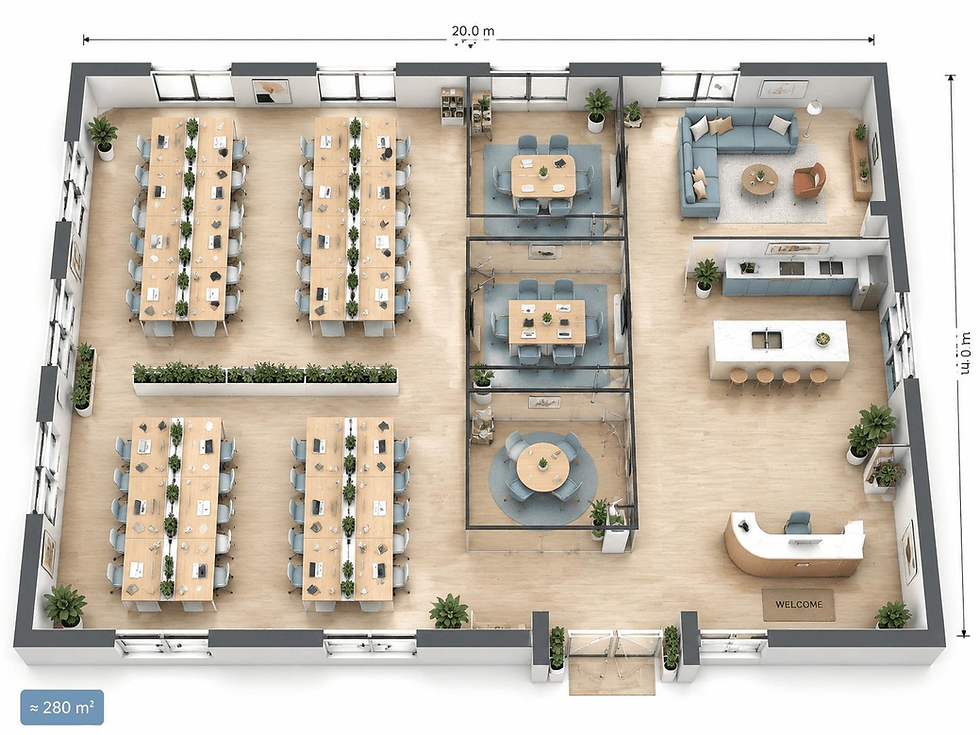
Before viewing properties, determine how the office will be used.
Consider whether your business requires private rooms, collaborative workstations, meeting areas, reception space, storage, or dedicated equipment rooms.
The number of employees is only one factor. Your company's working arrangements, client visits, and future hiring plans should also influence the layout.
Practical advice: Request a floor plan and verify the usable area, existing partitions, air-conditioning arrangement, and permitted modifications.
An efficient office layout can sometimes be more valuable than additional floor space.
4. Review Lease Terms and Flexibility Before Signing
Commercial office leases involve contractual commitments that may affect your business for several years.
In Metro Manila, some conventional office leases are negotiated for multiple years, while serviced and flexible offices may offer shorter arrangements. Actual terms depend on the landlord, building, and type of office.
Important provisions include the lease duration, rent escalation, security deposit, renewal conditions, early termination, and responsibility for repairs.
Businesses should also clarify whether the lease permits subleasing, office alterations, or expansion into additional units.

For example, a company expecting rapid growth may prefer an office arrangement that allows it to adjust its space requirements rather than committing to a large office immediately.
Flexible Office vs. Traditional Office Leasing
Flexible office spaces may offer furnished workstations, shared meeting rooms, internet, and shorter contractual commitments. These arrangements can reduce initial setup requirements, although the cost per workstation may be higher.
Traditional office leasing may provide greater control over layout, branding, and dedicated facilities, but often requires more planning for fit-out, furniture, utilities, and longer commitments.
Practical advice: Compare both options using the full contract cost, required setup expenses, and expected business growth.
Before signing, have important contractual provisions reviewed by a qualified professional.
5. Evaluate Building Infrastructure, Safety, and Accessibility
An office should support business operations throughout the working day.
A good location may lose its advantage if the building experiences frequent technical problems, has inadequate internet connectivity, or lacks suitable facilities.
When viewing an office, check the reliability of electricity and water supply, internet service availability, elevators, air-conditioning, security, and emergency systems.
Businesses with international clients or remote teams may place particular importance on reliable connectivity and backup power arrangements.

Accessibility is equally important.
Confirm the availability and cost of parking, access to public transportation, delivery procedures, and building entry requirements for employees and visitors.
Practical advice: Ask building management about backup power coverage, permitted internet providers, operating hours, and maintenance procedures.
Do not assume every office building offers the same facilities.
6. Assess Building Management and Ongoing Support
A well-managed office building can make everyday operations easier.
Even a modern office may become inconvenient if maintenance requests are delayed, building policies are unclear, or communication with management is difficult.
Before leasing, ask how repairs are reported, who is responsible for common-area maintenance, and how urgent technical issues are handled.

For businesses entering the Philippines, having a local contact who can coordinate with the landlord and building administration can also be useful.
Japanese companies and overseas tenants may benefit from English- and Japanese-language assistance when reviewing property details, coordinating viewings, and understanding commercial lease arrangements.
Practical advice: Confirm the responsibilities of the landlord, tenant, and building management before signing.
Clear responsibilities help prevent misunderstandings and unexpected operating expenses.
Manila Real Estate Rent: Quick Office Leasing Checklist
Before choosing an office in Metro Manila, review these six areas:
Key Factor | What to Confirm |
Location | Employee commute, client access, transportation |
Total Cost | Base rent, dues, taxes, parking, utilities |
Office Layout | Usable area, workstations, meeting rooms |
Lease Terms | Duration, escalation, renewal, termination |
Infrastructure | Internet, electricity, security, elevators |
Building Management | Maintenance, response procedures, support |
Frequently Asked Questions (FAQ)
1. How much does it cost to rent office space in Manila?
Office rental costs vary depending on the district, building classification, floor area, amenities, and lease conditions. Businesses should request current quotations and compare the total cost, including dues, utilities, taxes, and parking where applicable.
2. Which area is best for leasing an office in Metro Manila?
Makati, BGC, Ortigas, and Quezon City offer different advantages. The best location depends on your budget, employee locations, clients, accessibility requirements, and business operations.
3. What is the difference between flexible office space and traditional leasing?
Flexible offices commonly offer shorter commitments and ready-to-use facilities, while traditional offices generally provide greater control over the workspace but may require more setup and longer contractual commitments.
4. How much security deposit is required for commercial office leasing?
The required deposit varies by landlord and agreement. Some commercial leases require several months of security deposit and advance rent. Confirm the exact amount, permitted deductions, and refund conditions in writing.
5. Can foreign companies lease office space in the Philippines?
Foreign-owned companies may be able to lease commercial premises, subject to their legal status, business registration, intended activities, and applicable requirements. Businesses should obtain professional advice regarding the documents and approvals needed for their operations.
6. What should businesses check before signing an office lease?
Review the total rental cost, lease duration, escalation provisions, fit-out rules, maintenance responsibilities, termination conditions, permitted business use, and building facilities.
Final Thoughts
Leasing office space in Metro Manila is an important business decision that should balance location, affordability, operational requirements, and future flexibility.
An attractive office address may offer advantages, but the right property should also provide a practical layout, reliable facilities, clear lease conditions, and manageable operating expenses.
For companies exploring Manila Real Estate Rent options, comparing several properties before committing can help reduce unnecessary costs and support long-term business operations.
Find the Right Office Space with BedandGo Real Estate
Looking for commercial office space in Makati, BGC, Ortigas, Quezon City, or other Metro Manila business districts?
BedandGo Real Estate can assist businesses with property searches, office comparisons, viewing coordination, and leasing discussions based on their operational requirements.
We also provide English- and Japanese-language support for clients who need assistance navigating the Philippine property market.
Contact BedandGo Real Estate to discuss your commercial office requirements.
Website: https://www.bedandgoinc.com
Disclaimer: This article provides general information. Commercial rental costs, lease terms, taxes, and regulatory requirements vary by property and transaction. Verify the applicable terms before entering into a lease.


コメント